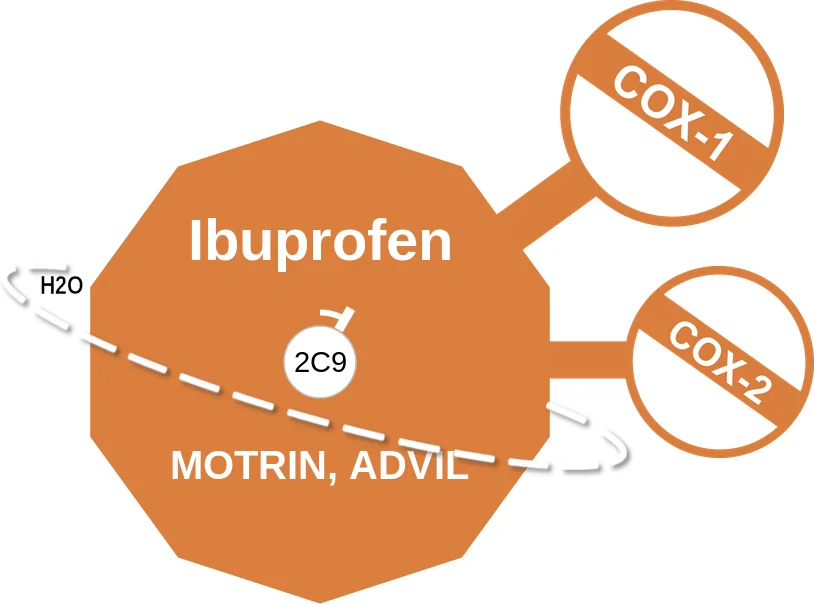
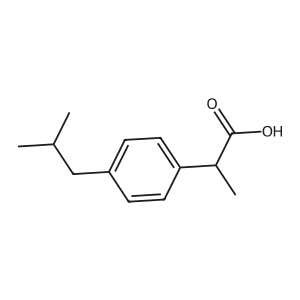
Ibuprofen
MOTRIN, ADVIL
Pronunciation: eye-BYOO-proe-fen
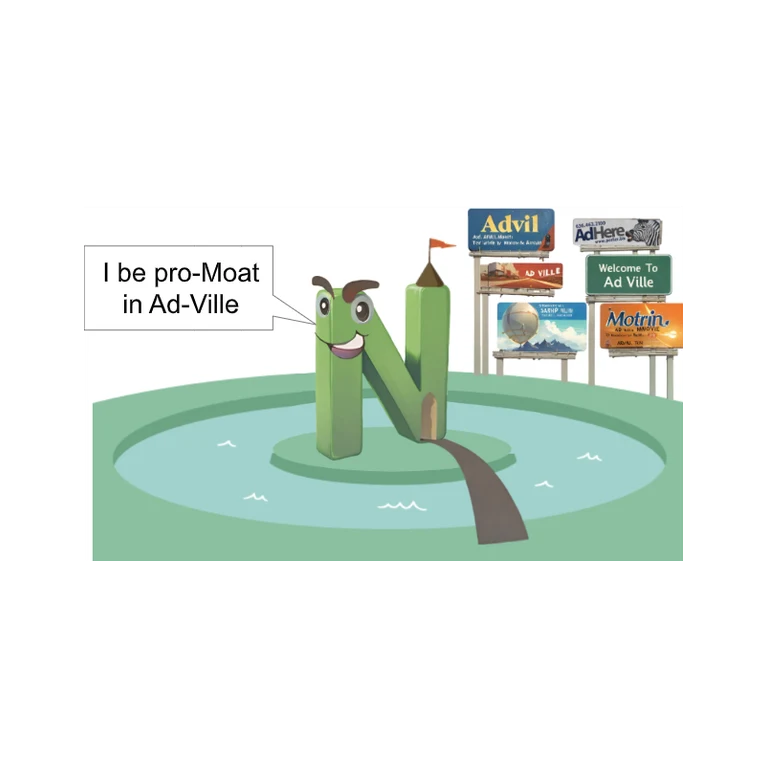
“I be pro-Moat in Ad-Ville”
“The N said... NSAID”
What it isNonselective COX-1 and COX-2 inhibitor; pain, fever and inflammation.
Why this oneShort action and pediatric liquid formulations make it the flexible OTC NSAID for fever and brief pain.
What limits itGI bleeding, kidney injury and cardiovascular risk rise with exposure. Taken before aspirin it can blunt platelet effect; lithium also rises.
Ibuprofen prescription history
Animated chart of estimated U.S. prescriptions per year, NSAIDs (1914–2026). Ibuprofen enters in 1974 (estimated).
FDA-approved for
- pain/inflammation (1974)
Classes and tags
Clinical profile
Legacy pregnancy categoryMultiple / indication-, trimester- or formulation-dependent
Defining liabilityGI bleeding, kidney injury, hypertension and fluid retention; many agents increase lithium concentrations.
FDA label
Read the full label on DailyMed ↗
| FDA dosing | Population | Start | Target | Max |
|---|---|---|---|---|
| Rheumatoid arthritis / osteoarthritis (signs and symptoms, incl. flares) | Adults | 400 mg, 600 mg, or 800 mg TID or QID (1,200–3,200 mg/day) | Lowest dose giving acceptable control; RA usually needs higher doses than OA | 3200 mg/day |
| Mild to moderate pain | Adults | 400 mg q4–6h PRN | 3200 mg/day (doses >400 mg no more effective) | |
| Primary dysmenorrhea | Adults | 400 mg q4h PRN, from earliest onset of pain | 3200 mg/day |
Renal Advanced renal disease: not recommended (no data); if started, monitor renal function closely
Hepatic No dose adjustment labeled; discontinue if liver disease signs/systemic manifestations develop or abnormal LFTs persist/worsen
Chronic arthritis: response sometimes in a few days to a week, most often by two weeks; then review/adjust dose. 3,200 mg/day only if added benefit offsets risk. Pediatric safety/effectiveness not established. Elderly (≥65 yr): use caution.
Instructions
- Take with meals or milk if GI complaints occur
- Use lowest effective dose for shortest duration
Available strengths
- tab 200, 400, 600, 800 mg (200 OTC)
Contraindications
- Asthma, urticaria, or allergic-type reactions after aspirin or other NSAIDs
- Coronary artery bypass graft (CABG) surgery setting
Cautions
- Cardiovascular thrombotic events (incl. post-MI)
- Hypertension
- Heart failure and edema
- GI ulceration, bleeding, perforation
- Renal effects; advanced renal disease not recommended
- Anaphylactoid reactions (aspirin triad)
- Serious skin reactions (SJS/TEN, fixed drug eruption)
- DRESS
- Fetal toxicity (ductus closure, oligohydramnios)
- Not a corticosteroid substitute; may mask fever/inflammation
- Hepatic effects (LFT elevations, rare severe hepatic reactions)
- Hematologic effects (anemia, platelet inhibition)
- Preexisting asthma (aspirin-sensitive)
- Ophthalmologic effects (blurred vision, scotomata, color vision change)
- Aseptic meningitis (esp. SLE/connective tissue disease)
Adverse reactions
- Nausea (3–9%)
- Epigastric pain (3–9%)
- Heartburn (3–9%)
- Dizziness (3–9%)
- Rash (3–9%)
- Diarrhea/constipation
- Indigestion/abdominal distress
- Abdominal cramps or pain
- Bloating/flatulence
- Headache/nervousness
- Tinnitus
- Edema/fluid retention
Pregnancy Avoid at ~30 weeks gestation and later (premature ductus closure); limit dose/duration at ~20–30 weeks (oligohydramnios/neonatal renal impairment; consider ultrasound if >48 h).
Lactation Unknown whether excreted in human milk; decide whether to discontinue nursing or the drug.
Cost
Generic entry1985
Open Ibuprofen in the interactive console ↗
Memory aids: interaction avatars
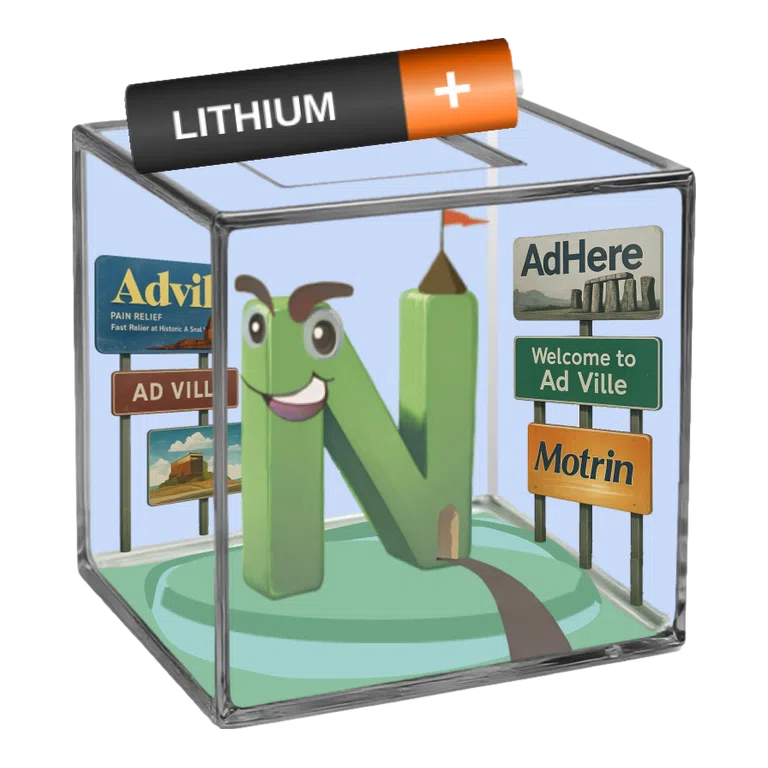
Open Ibuprofen in the interactive console ↗
Self-check
- What can ibuprofen taken before aspirin do to aspirin’s platelet effect?
Blunt it. - How can ibuprofen affect lithium levels?
Raise them.