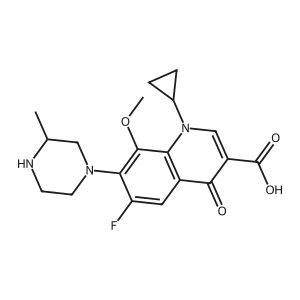
Gatifloxacin
TEQUIN
Pronunciation: ga-ti-FLOX-a-sin
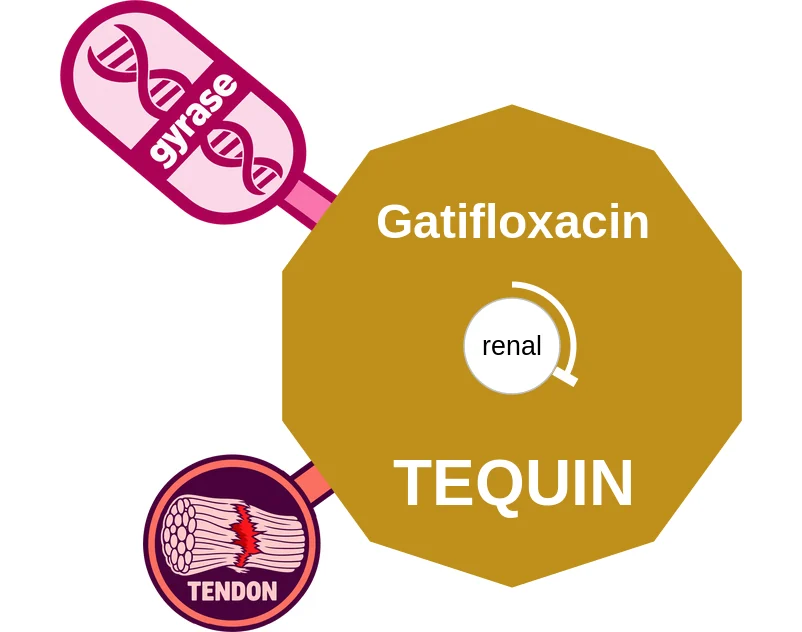
What it isDNA-gyrase-inhibiting fluoroquinolone eye drop; bacterial conjunctivitis.
Why this oneIts current role is topical ocular therapy because the systemic product's dysglycemia risk outweighed its advantages.
What limits itLocal irritation and hypersensitivity can occur; the withdrawn systemic formulation caused severe hypo- and hyperglycemia.
Gatifloxacin prescription history
Animated chart of estimated U.S. prescriptions per year, Quinolone antibacterials (1964–2026). Gatifloxacin enters in 2000 (estimated).
Principal riskNo FDA boxed warning; systemic gatifloxacin (Tequin) was withdrawn from the U.S. market in 2006 for serious dysglycemia.
Classes and tags
Clinical profile
Legacy pregnancy categoryC
Defining liabilityLocal irritation or hypersensitivity; systemic toxicity is minimal with correct local use.
FDA label
Read the full label on DailyMed ↗
NO BOXED WARNINGS
| FDA dosing | Population | Start | Target | Max |
|---|---|---|---|---|
| Bacterial conjunctivitis | Adults and peds >=1 year | Day 1: 1 drop ophthalmic in affected eye(s) Q2H while awake, up to 8 doses | Days 2-7: 1 drop 2-4x/day while awake | 8 drops/day (Day 1) |
Renal Undefined
Hepatic Undefined
Instructions
- Topical ophthalmic use only — do not inject or introduce directly into anterior chamber of the eye
Available strengths
- drops 0.5 %
- sol 5 mg/mL
Contraindications
- History of hypersensitivity to gatifloxacin or other quinolones
Cautions
- Hypersensitivity incl. anaphylaxis, angioedema, dyspnea, urticaria — possible even after a single dose; rare SJS; discontinue if allergic reaction
- Prolonged use may cause overgrowth of nonsusceptible organisms incl. fungi — discontinue and treat if superinfection
- Corneal endothelial cell injury if introduced into anterior chamber
Adverse reactions
- Worsening conjunctivitis, eye irritation, dysgeusia, eye pain (>=1%)
- Chemosis, conjunctival hemorrhage, dry eye, eye discharge, eyelid edema, headache, keratitis, red eye, reduced visual acuity (other studies)
- Postmarketing: anaphylaxis, angioedema, blurred vision, eye swelling, allergic dermatitis
Pregnancy No human data; no adverse developmental outcomes in animals at clinically relevant doses (teratogenic only at >=600x human ophthalmic dose)
Lactation Unknown if present in human milk; systemic levels after ocular dosing are low; weigh benefits vs risk
Cost
| Strength | #/mo | generic $/unit | CostPlus | |
|---|---|---|---|---|
| 0.5 % | drops | per unit | not offered |
Generic entry2011
Open Gatifloxacin in the interactive console ↗
Self-check
- Why did systemic gatifloxacin lose its role?
Dysglycemia risk outweighed its advantages. - What is gatifloxacin’s current treatment route here?
Topical ocular.