Diclofenac topical patch
FLECTOR
What it isDiclofenac epolamine 1.3% topical patch (FLECTOR, 2007) — a 12-hour patch applied directly over minor strains, sprains, and contusions; topical NSAID delivery for a focal soft-tissue injury.
Why this oneSame molecule and receptor pharmacology as the parent card — the formulation (and its label) is the difference.
What limits itClass warnings of the parent molecule apply unchanged.
FDA-approved for
- acute pain from minor strains, sprains, contusions (2007)
FDA label
Read the full label on DailyMed ↗
| FDA dosing | Population | Start | Target | Max |
|---|---|---|---|---|
| Acute pain due to minor strains, sprains, and contusions | Adults and pediatric patients 6 years and older | 1 topical system to the most painful area BID | 1 topical system BID |
Renal Undefined
Hepatic Undefined
Use the lowest effective dosage for the shortest duration consistent with treatment goals.
Instructions
- Apply to intact skin only; do not apply to non-intact or damaged skin
- If edges peel, tape down or use a non-occlusive mesh netting sleeve
- Do not wear while bathing/showering; wash hands after handling; avoid eye contact
- Do not combine with an oral NSAID unless benefit outweighs risk
- Use lowest effective dose for shortest duration
Contraindications
- History of asthma, urticaria, or other allergic-type reactions after taking aspirin or other NSAIDs
- In the setting of coronary artery bypass graft (CABG) surgery
- For use on non-intact or damaged skin resulting from any etiology, including exudative dermatitis, eczema, infected lesions, burns or wounds
Cautions
- Hepatotoxicity — discontinue if abnormal liver tests persist/worsen
- Hypertension; heart failure and edema
- Renal toxicity and hyperkalemia
- Anaphylactic reactions
- Exacerbation of asthma related to aspirin sensitivity
- Serious skin reactions (exfoliative dermatitis, SJS, TEN, GBFDE)
- Drug Reaction with Eosinophilia and Systemic Symptoms (DRESS)
- Fetal toxicity (avoid at ≥30 weeks; limit 20–30 weeks gestation)
- Hematologic toxicity; masking of inflammation/fever
- Accidental exposure in children/pets from used systems
Adverse reactions
- Application site pruritus, dermatitis, burning
- Nausea, dysgeusia, dyspepsia
- Headache (pediatric), application site pruritus (pediatric)
Pregnancy Avoid use at about 30 weeks gestation and later (premature closure of fetal ductus arteriosus); limit dose/duration between about 20 and 30 weeks (oligohydramnios/neonatal renal impairment).
Lactation Small amounts of diclofenac present in human milk (topical exposure <1% of a 50 mg oral dose); consider benefits of breastfeeding with clinical need.
⚠ BOXED WARNINGS
- Cardiovascular thrombotic events
- Gastrointestinal bleeding, ulceration and perforation
Classes and tags
Clinical profile
Mechanism of action: Diclofenac topical patch ballicule
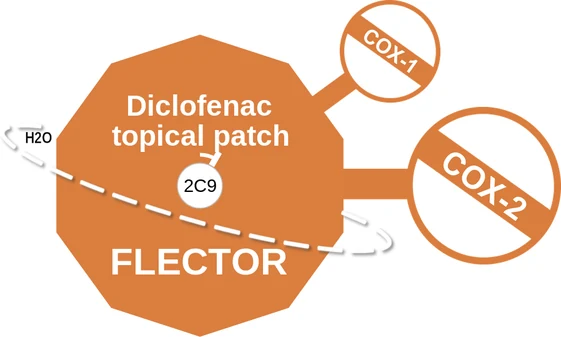
Open Diclofenac topical patch in the interactive console ↗
Memory aids: mascots and interaction avatars

“The N said... NSAID”