Empagliflozin
JARDIANCE
What it isSGLT2 inhibitor promoting urinary glucose loss; type 2 diabetes, heart failure and chronic kidney disease.
Why this oneLandmark cardiovascular mortality data made it the prototype SGLT2 inhibitor for diabetes with established ASCVD.
What limits itGenital mycotic infection and volume depletion. Hold during acute illness and before surgery because of euglycemic ketoacidosis.
FDA-approved for
- type 2 diabetes (2014)
- heart failure (2021)
- chronic kidney disease (2023)
FDA label
Read the full label on DailyMed ↗
| FDA dosing | Population | Start | Target | Max |
|---|---|---|---|---|
| Heart failure — reduce risk of CV death and hospitalization for HF | Adults | 10 mg QD in the morning | 10 mg QD | 10 mg QD |
| Chronic kidney disease at risk of progression — reduce risk of sustained eGFR decline, ESKD, CV death, hospitalization | Adults | 10 mg QD in the morning | 10 mg QD | 10 mg QD |
| Type 2 diabetes mellitus with established CV disease — reduce risk of CV death | Adults | 10 mg QD in the morning | 10 mg QD | 10 mg QD |
| Type 2 diabetes mellitus — glycemic control (adjunct to diet and exercise) | Adults | 10 mg QD in the morning | 10-25 mg QD | 25 mg QD |
| Type 2 diabetes mellitus — glycemic control (adjunct to diet and exercise) | Pediatric patients >=10 y | 10 mg QD in the morning | 10-25 mg QD | 25 mg QD |
Titration Glycemic control: may increase 10 mg to 25 mg QD once the patient is tolerating 10 mg (no minimum interval specified)
Renal Assess eGFR before initiating and as indicated; glycemic-control use not recommended if eGFR <30 mL/min/1.73m2; HF/CKD outcome trials enrolled to eGFR >=20; not studied at eGFR <20 or on dialysis
Hepatic May be used in hepatic impairment (no dosage adjustment specified)
Instructions
- Take once daily in the morning, with or without food.
- Assess volume status and correct volume depletion before initiating.
- Withhold for at least 3 days, if possible, before major surgery or procedures with prolonged fasting; resume when clinically stable and eating.
- Missed dose: take as soon as possible; do not double the next dose.
Cautions
- Ketoacidosis, incl. fatal cases and euglycemic presentations (glucose may be <250 mg/dL): markedly increased risk in type 1 diabetes (not indicated for T1DM glycemic control); assess regardless of glucose, discontinue if suspected; withhold in predisposing situations (surgery, fasting, acute illness, alcohol abuse).
- Volume depletion, symptomatic hypotension, and acute kidney injury: risk higher with eGFR <60, elderly, or loop diuretics — assess and correct volume status first.
- Urosepsis and pyelonephritis: increases UTI risk; evaluate and treat promptly.
- Hypoglycemia when combined with insulin or insulin secretagogues (consider lowering their dose); pediatric patients >=10 y had higher hypoglycemia risk regardless of insulin.
- Necrotizing fasciitis of the perineum (Fournier's gangrene), in females and males: assess genital/perineal pain, erythema, swelling with fever or malaise; treat urgently and discontinue.
- Genital mycotic infections, esp. with prior history.
- Lower limb amputation: imbalance seen in some SGLT2-inhibitor trials; monitor for foot infections, ulcers, new pain; routine preventive foot care.
- Serious hypersensitivity reactions incl. angioedema: discontinue if they occur.
Adverse reactions
- Urinary tract infections (9.3%)
- Female genital mycotic infections (5.4-6.4%)
- Increased urination (polyuria/pollakiuria/nocturia)
- Male genital mycotic infections (balanitis/balanoposthitis)
- Upper respiratory tract infection
- Hypoglycemia when combined with insulin or sulfonylurea
Pregnancy Not recommended during the second and third trimesters (animal data: adverse renal development effects at ~13x clinical exposure); limited human data.
Lactation Not recommended while breastfeeding — present in rat milk and potential risk to the developing infant kidney (human kidney matures through first 2 years).
NO BOXED WARNINGS
Principal riskEuglycemic diabetic ketoacidosis
Cost, est. cash$300–$1,000/month
Generic entry2029+ est.
Classes and tags
Clinical profile
Legacy pregnancy categoryMultiple / indication-, trimester- or formulation-dependent
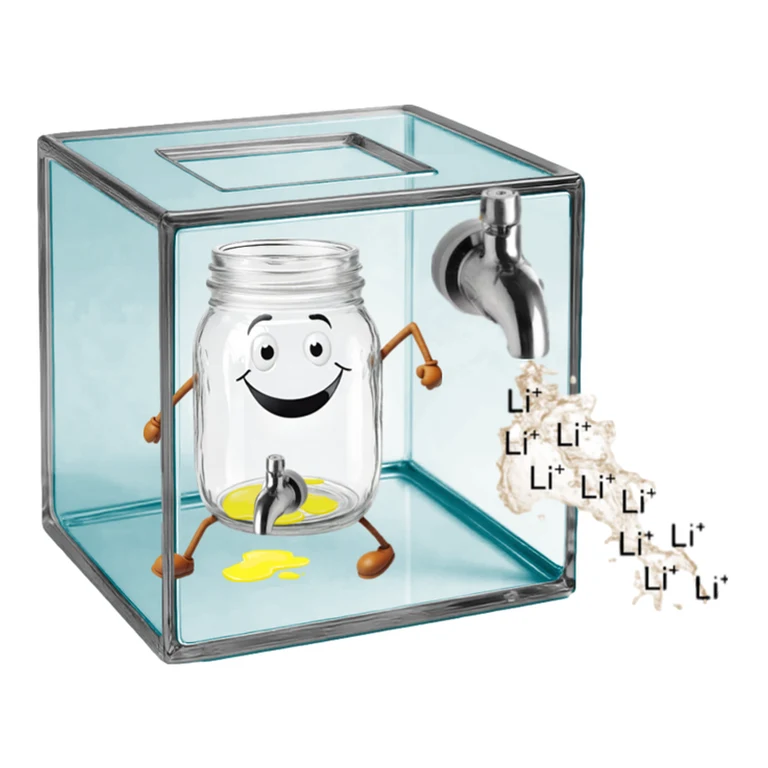
Defining liabilityGenital infection, volume depletion and euglycemic ketoacidosis; may lower lithium concentrations.
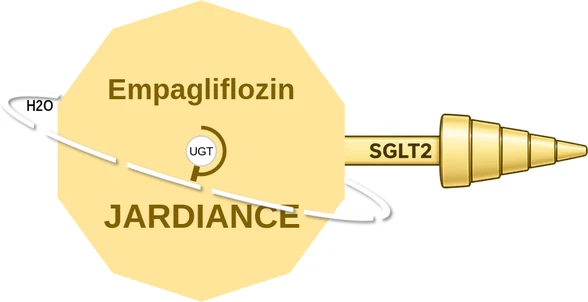
Mechanism of action: Empagliflozin ballicule
Open Empagliflozin in the interactive console ↗
Memory aids: mascots and interaction avatars