Dorzolamide
TRUSOPT
What it isTopical carbonic anhydrase inhibitor; open-angle glaucoma.
Why this oneUnlike brinzolamide’s suspension, its clear solution needs no shaking and causes less transient blur.
What limits itStinging and a bitter taste. It is a sulfonamide, and corneal decompensation can occur in a compromised endothelium.
FDA-approved for
- open-angle glaucoma / ocular hypertension (1994)
FDA label
Read the full label on DailyMed ↗
| FDA dosing | Population | Start | Target | Max |
|---|---|---|---|---|
| Elevated intraocular pressure | Adults | 1 drop in affected eye(s) TID | 1 drop in affected eye(s) TID | 1 drop in affected eye(s) TID |
| Elevated intraocular pressure | Pediatric patients | 1 drop in affected eye(s) TID | 1 drop in affected eye(s) TID | 1 drop in affected eye(s) TID |
Renal Not studied in CrCl <30 mL/min; not recommended in severe renal impairment (dorzolamide and its metabolite are renally excreted).
Hepatic Not studied in hepatic impairment; use with caution.
If more than one topical ophthalmic drug is used, administer the drugs at least 5 minutes apart.
Instructions
- Instill 1 drop in the affected eye(s) three times daily.
- May be used concomitantly with other topical ophthalmic IOP-lowering products.
- Do not let the container tip contact the eye or surrounding structures — contaminated multi-dose containers have caused bacterial keratitis.
- Discontinue and evaluate the patient if ocular allergic-type reactions (conjunctivitis, lid reactions) or any serious hypersensitivity reaction occurs.
Cautions
- Sulfonamide hypersensitivity: dorzolamide is a sulfonamide and is absorbed systemically despite topical use; rare fatal reactions including Stevens-Johnson syndrome, toxic epidermal necrolysis, fulminant hepatic necrosis, agranulocytosis and aplastic anemia have occurred. Discontinue if signs of serious reaction appear.
- Bacterial keratitis from inadvertently contaminated multi-dose containers, especially with concurrent corneal disease or epithelial disruption.
- Corneal endothelium: increased potential for corneal edema in patients with low endothelial cell counts — use with caution.
- Allergic-type local ocular reactions (conjunctivitis, lid reactions) with chronic use; resolve on discontinuation.
- Acute angle-closure glaucoma requires therapeutic interventions beyond ocular hypotensive agents.
Adverse reactions
- Ocular burning, stinging or discomfort immediately after instillation (~1/3 of patients)
- Bitter taste (~1/4 of patients)
- Superficial punctate keratitis (10–15%)
- Signs and symptoms of ocular allergic reaction (~10%)
- 1–5%: conjunctivitis and lid reactions, blurred vision, eye redness, tearing, dryness, photophobia
- Infrequent: headache, nausea, asthenia/fatigue; rare: skin rash, urolithiasis, iridocyclitis
- Postmarketing: systemic allergic reactions (angioedema, bronchospasm, pruritus, urticaria), Stevens-Johnson syndrome and toxic epidermal necrolysis, dizziness, paresthesia, ocular pain, transient myopia, choroidal detachment after filtration surgery, eyelid crusting, dyspnea, contact dermatitis, epistaxis, dry mouth, throat irritation
Pregnancy No adequate and well-controlled studies in pregnant women; oral dorzolamide caused fetal vertebral malformations in rabbits at 37x the clinical exposure and growth delays in rat offspring at 52x.
Lactation No human milk data; dorzolamide and its N-desethyl metabolite are present in rat milk — weigh benefits of breastfeeding against maternal clinical need.
NO BOXED WARNINGS
Principal riskBitter taste; sulfonamide cross-reactivity
Cost, est. cash$10–$400/month
Generic entry2008
Classes and tags
Clinical profile
Legacy pregnancy categoryUnknown / historical label unavailable
Defining liabilityLocal irritation, sensitization or administration-site injury; negligible systemic toxicity at usual use.
Mechanism of action: Dorzolamide ballicule
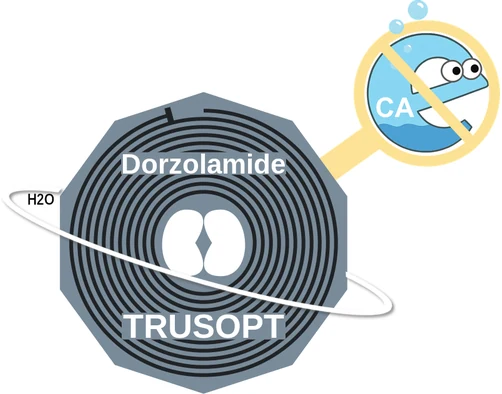
Open Dorzolamide in the interactive console ↗
Memory aids: mascots and interaction avatars