Dimenhydrinate
DRAMAMINE
Pronunciation: dye-men-HYE-dri-nayt
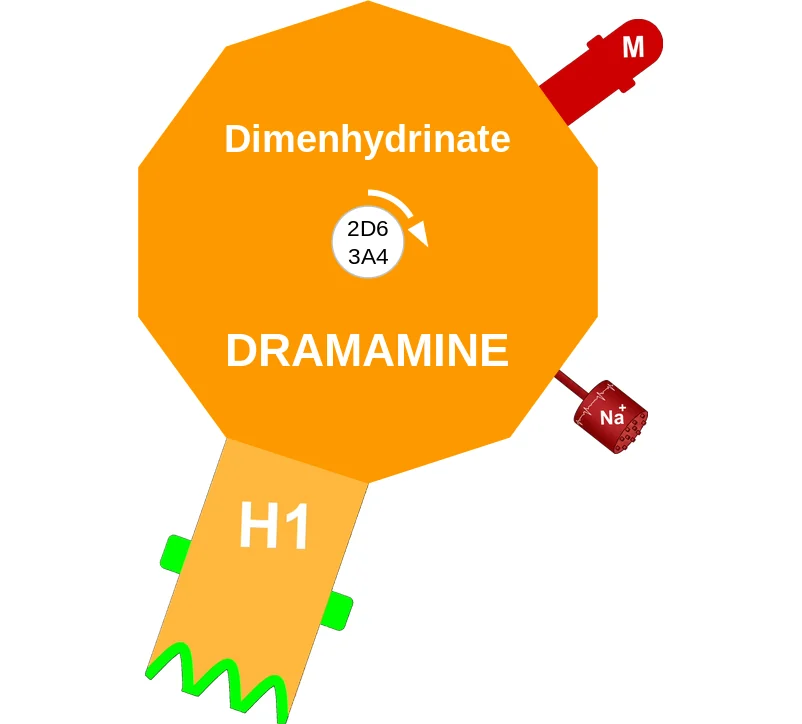

“Diamond hydrant in the Drama mine”
crimson → anticholinergic “red as a beet
mad as a hatter” → BBB-crossing antimuscarinic
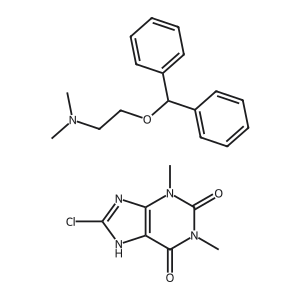
What it isSedating H1 and muscarinic antagonist formulated with a stimulant counter-ion; motion sickness and vestibular nausea.
Why this oneTreats vestibular nausea, which 5-HT3 antagonists do not.
What limits itAnticholinergic burden and sedation limit use. Prolonged treatment suppresses vestibular compensation and delays recovery.
Dimenhydrinate prescription history
Animated chart of estimated U.S. prescriptions per year, Antiemetics (1946–2026). Dimenhydrinate enters in 1949 (estimated).
FDA-approved for
- motion sickness / nausea
Off-label
- acute vestibular vertigo
Principal riskAnticholinergic burden and sedation
Classes and tags
Clinical profile
Defining liabilityMarked sedation and antimuscarinic toxicity
FDA label
Read the full label on DailyMed ↗
NO BOXED WARNINGS
| FDA dosing | Population | Start | Target | Max |
|---|---|---|---|---|
| Prevention/treatment of motion sickness | Adults & children ≥12 y | 1–2 tablets q4–6h | 1–2 tablets q4–6h | 8 tablets/24h |
| Prevention/treatment of motion sickness | Children 6 to <12 y | ½–1 tablet q6–8h | ½–1 tablet q6–8h | 3 tablets/24h |
| Prevention/treatment of motion sickness | Children 2 to <6 y | ½ tablet q6–8h | ½ tablet q6–8h | 1½ tablets/24h |
Renal Undefined
Hepatic Undefined
Do not exceed the age-specific 24-hour maximum.
Instructions
- To prevent motion sickness, take the first dose ½ to 1 hour before starting activity
- Do not take more than directed
- Children under 2 years: do not use except under advice of a doctor
Available strengths
- tab 25, 50 mg
- cap 50 mg
- chew tab 15, 25, 50 mg
- sol 15 mg/5 mL
- inj 50 mg/mL
Pregnancy Undefined
Lactation Undefined
Cost
| Strength | #/mo | generic $/unit | CostPlus | |
|---|---|---|---|---|
| 25 mg | tab | per unit | not offered | |
| 50 mg | tab | per unit | $0.06/ea | not offered |
Open Dimenhydrinate in the interactive console ↗
Self-check
- Which nausea type can dimenhydrinate treat that 5-HT3 antagonists do not?
Vestibular nausea. - Why can prolonged dimenhydrinate delay recovery?
Suppresses vestibular compensation.