Dex methylphenidate
FOCALIN
What it isActive d-enantiomer inhibiting dopamine and norepinephrine reuptake; ADHD.
Why it mattersIt removes the inactive l-enantiomer, allowing a lower milligram burden than racemic methylphenidate.
What it changesAppetite suppression, insomnia, and growth deceleration can limit use. Schedule II; monitor blood pressure and misuse.
FDA-approved for
- ADHD (2001)
FDA label
Read the full label on DailyMed ↗
| FDA dosing | Population | Start | Target | Max |
|---|---|---|---|---|
| ADHD — patients new to methylphenidate (or on other stimulants) | Peds ≥6 yr (label dosing text addresses pediatric patients) | 2.5 mg BID (5 mg/day), with or without food | Individualized; titrate weekly 2.5–5 mg | 20 mg/day (10 mg BID) |
| ADHD — patients currently on racemic methylphenidate | Peds (per label dosing text) | Half the current total daily methylphenidate dose | Individualized | 20 mg/day (10 mg BID) |
Titration Weekly (2.5–5 mg increments)
Renal Undefined
Hepatic Undefined
Instructions
- BID, doses at least 4 hours apart, with or without food
- Reduce dose or discontinue if paradoxical aggravation of symptoms or adverse reactions
- Discontinue if no improvement after appropriate dose adjustment over 1 month
- Pretreatment: cardiac history/exam and screen for tics/Tourette's and family history
Contraindications
- Concomitant MAOI treatment, or within 14 days of stopping an MAOI (hypertensive crisis risk)
Cautions
- Avoid in serious cardiac disease; increases BP and heart rate — monitor
- Psychiatric adverse reactions (psychosis/mania); priapism
- Peripheral vasculopathy incl. Raynaud's
- Long-term growth suppression in peds — monitor growth; interrupt if not growing/gaining as expected
- Acute angle-closure glaucoma / increased IOP
- Emergence/worsening of tics and Tourette's
Adverse reactions
- Peds (≥5% and 2× placebo): abdominal pain, fever, nausea, anorexia
Pregnancy d-enantiomer of methylphenidate; published methylphenidate data have not identified drug-associated risk of major birth defects/miscarriage; possible CNS-stimulant fetal risks; registry available
Lactation Methylphenidate present in milk (infant dose 0.16–0.7% of maternal weight-adjusted dose); no adverse infant reports; monitor breastfed infant
⚠ BOXED WARNING
- Abuse, misuse and addiction
Cost, est. cash$10–$300/month
Generic entry2007
Classes and tags
Clinical profile
Legacy pregnancy categoryC
Defining liabilityCardiovascular stimulation, appetite suppression, insomnia, misuse and stimulant-induced psychosis.
Mechanism of action: Dex methylphenidate ballicule
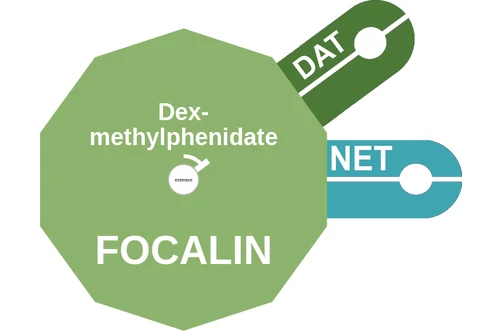
Open Dex methylphenidate in the interactive console ↗
Memory aids: mascots and interaction avatars

Ball and chain" must be clipped
Scantron → methylphenidate product