Desmopressin
DDAVP
What it isVasopressin V2-receptor agonist; diabetes insipidus, nocturnal enuresis, and bleeding in von Willebrand disease.
Why this oneV2 selectivity produces antidiuresis without vasoconstriction and releases stored von Willebrand factor.
What limits it⚑ Hyponatremia can be severe or fatal—restrict fluid and monitor sodium in higher-risk patients.
FDA-approved for
- diabetes insipidus/enuresis (1978)
FDA label
Read the full label on DailyMed ↗
| FDA dosing | Population | Start | Target | Max |
|---|---|---|---|---|
| Central diabetes insipidus | Adults & children | 0.05 mg BID | 0.1-0.8 mg/day divided (range 0.1-1.2 mg/day divided BID-TID) | 1.2 mg/day |
| Primary nocturnal enuresis | >=6 yr | 0.2 mg QHS | titrate to 0.6 mg QHS | 0.6 mg QHS |
Renal Contraindicated if CrCl <50 mL/min (moderate-to-severe renal impairment)
Hepatic Undefined
Instructions
- Observe fluid restriction; for enuresis limit fluid from 1 h before dose until next morning (>=8 h)
- Switching from intranasal: start tablets 12 h after last intranasal dose (DI) or 24 h after (enuresis)
- Titrate to adequate diurnal water turnover / response
Contraindications
- Moderate-to-severe renal impairment (CrCl <50 mL/min)
- Hyponatremia or a history of hyponatremia
Cautions
- Water intoxication and hyponatremia (rare postmarketing cases; can be fatal if not diagnosed and treated) - potent antidiuretic; fluid restriction recommended and careful medical supervision required
- Adjust fluid intake downward, particularly in pediatric and geriatric patients; observe all patients for hyponatremia signs (headache, nausea/vomiting, weight gain, lethargy, disorientation, muscle weakness/cramps, and severe: seizures, coma, respiratory arrest)
- Caution in habitual or psychogenic polydipsia - greater risk of hyponatremia from excessive water intake
- Caution in coronary artery insufficiency and/or hypertensive cardiovascular disease - possible blood pressure rise (seen with high-dose intranasal and injection forms)
- Caution in conditions with fluid/electrolyte imbalance (cystic fibrosis, heart failure, renal disorders) - prone to hyponatremia
- Rare severe allergic reactions; anaphylaxis reported with IV and intranasal desmopressin (not with tablets)
Adverse reactions
- Headache, nausea, flushing, mild abdominal cramps (dose-related)
- Hyponatremia / water intoxication
- Transient AST elevations
Pregnancy Category B; no fetal harm in animal studies; use only if clearly needed
Lactation Undefined
NO BOXED WARNINGS
Principal riskSevere hyponatremia unless fluid is restricted
Cost, est. cash$20–$1,500/month
Generic entry1997
Classes and tags
Clinical profile
Legacy pregnancy categoryUnknown / historical label unavailable
Defining liabilityGenerally tolerated at therapeutic doses; clinically important risks are agent-specific and increase with interactions or organ impairment.
Mechanism of action: Desmopressin ballicule
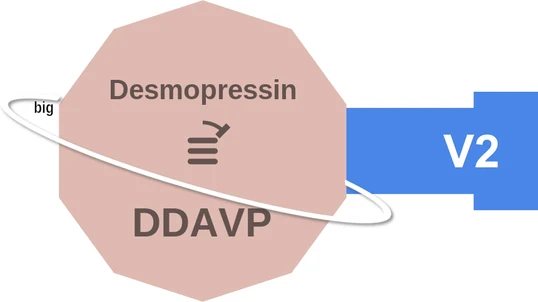
Open Desmopressin in the interactive console ↗
Memory aids: mascots and interaction avatars

Filled with water → causes hyponatremia
Lowers serum sodium