Demeclocycline
DECLOMYCIN
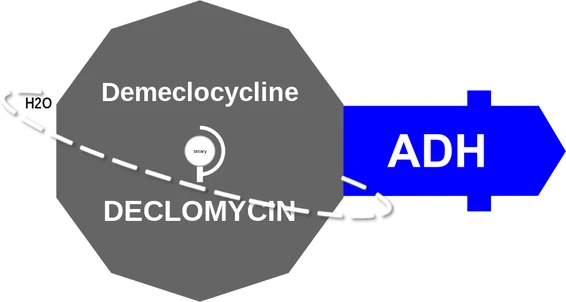
What it isTetracycline that antagonizes renal antidiuretic-hormone action; SIADH-related hyponatremia.
Why this oneIt deliberately induces nephrogenic diabetes insipidus, correcting water retention in SIADH.
What limits itSlow onset, photosensitivity, and nephrotoxicity limit use; vasopressin antagonists have largely displaced it.
FDA-approved for
- bacterial infections (1959)
- SIADH (hyponatremia) (1959)
FDA label
Read the full label on DailyMed ↗
| FDA dosing | Population | Start | Target | Max |
|---|---|---|---|---|
| Bacterial infection | Adult | 150 mg QID or 300 mg BID | 150 mg QID or 300 mg BID | 600 mg/day |
| Bacterial infection | Peds >8 yr | 7-13 mg/kg/day divided BID-QID | 7-13 mg/kg/day divided BID-QID | 600 mg/day |
| Gonorrhea (penicillin-sensitive) | Adult | 600 mg once | then 300 mg q12h x4 days | 3 g total |
Renal Use cautiously; reduce individual doses and/or extend dosing intervals in renal impairment
Hepatic Use cautiously; reduce individual doses and/or extend dosing intervals in hepatic impairment
Instructions
- Give >=1 h before or 2 h after meals; avoid antacids (Al/Ca/Mg), iron, and dairy which impair absorption
- Take with adequate fluid to reduce esophageal irritation; do not lie down immediately after dosing
- Continue therapy >=24-48 h after symptoms and fever subside
Cautions
- Fetal harm; permanent tooth discoloration (yellow-gray-brown) and enamel hypoplasia with use during tooth development (last half of pregnancy, infancy, childhood to age 8) - avoid unless other drugs are not likely to be effective or are contraindicated
- Reversible decrease in fibula growth rate reported in premature infants
- Anti-anabolic effect raises BUN; in renal impairment may cause azotemia, hyperphosphatemia, acidosis, drug accumulation, and possible liver toxicity - use lower doses; consider serum drug levels with prolonged therapy
- Photosensitivity/phototoxicity (exaggerated sunburn, severe burns on exposed surfaces) - discontinue at first evidence of skin erythema
- Nephrogenic diabetes insipidus syndrome (polyuria, polydipsia, weakness) with long-term therapy - dose-dependent, reversible on discontinuation
- CNS symptoms (headache, dizziness, light-headedness, vertigo, blurred vision) - caution with driving or hazardous machinery
- C. difficile-associated diarrhea (mild diarrhea to fatal colitis), reported even >2 months after antibacterial use
- Pseudotumor cerebri (benign intracranial hypertension) in adults; bulging fontanels in infants - usually resolve on discontinuation but permanent sequelae possible
- Overgrowth of nonsusceptible organisms including fungi - discontinue if superinfection occurs
Adverse reactions
- GI: anorexia, nausea, vomiting, diarrhea, esophageal ulceration, hepatotoxicity
- Skin: maculopapular/erythematous rash, photosensitivity, erythema multiforme, rare SJS
- Tooth discoloration (<8 yr)
- Renal toxicity: acute renal failure, nephrogenic diabetes insipidus
- Hematologic: hemolytic anemia, thrombocytopenia, neutropenia, eosinophilia
- Hypersensitivity: urticaria, angioedema, anaphylaxis
Pregnancy Undefined
Lactation Undefined
NO BOXED WARNINGS
Principal riskNephrotoxicity; photosensitivity
Cost, est. cash$10–$300/month
Generic entry2004
Classes and tags
Clinical profile
Legacy pregnancy categoryD
Defining liabilityAllergy, gastrointestinal effects and agent-specific renal, hepatic, hematologic or interaction risks.
Mechanism of action: Demeclocycline ballicule