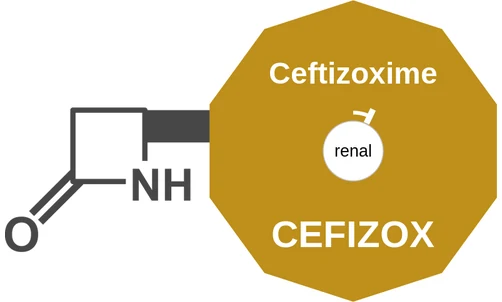
Ceftizoxime
CEFIZOX
What it isA third-generation parenteral cephalosporin.
Why this oneProvides broad Gram-negative coverage for serious infections including pelvic inflammatory and intra-abdominal disease.
What limits itRenally eliminated and now largely withdrawn from the US market despite retained efficacy.
FDA label
Read the full label on DailyMed ↗
| FDA dosing | Population | Start | Target | Max |
|---|---|---|---|---|
| Usual adult dosing (susceptible infections) | adults | 1-2 g IV/IM q8-12h | 1-2 g q8-12h | 12 g/day (life-threatening) |
| Uncomplicated urinary tract infection | adults | 500 mg q12h IM/IV | 500 mg q12h | 1 g/day |
| Other infection sites | adults | 1 g q8-12h IM/IV (2-3 g/day) | 1 g q8-12h | 3 g/day |
| Severe or refractory infection | adults | 1 g q8h or 2 g q8-12h IM/IV (3-6 g/day) | 1 g q8h or 2 g q8-12h | 6 g/day |
| Pelvic inflammatory disease (add antichlamydial cover if C. trachomatis suspected) | adults | 2 g q8h IV (6 g/day) | 2 g q8h IV | 6 g/day |
| Life-threatening infection | adults | 3-4 g q8h IV (9-12 g/day) | 3-4 g q8h IV | 2 g q4h (12 g/day) |
| Uncomplicated gonorrhea | adults | 1 g IM single dose | single dose | 1 g x1 |
| Susceptible infections | peds >=6 months | 50 mg/kg q6-8h | 50 mg/kg q6-8h | 200 mg/kg/day (not to exceed max adult dose for serious infection) |
Renal Load 500 mg-1 g IM/IV, then by CrCl — 50-79: 500 mg q8h (life-threatening 0.75-1.5 g q8h); 5-49: 250-500 mg q12h (0.5-1 g q12h); 0-4/dialysis: 500 mg q48h or 250 mg q24h (0.5-1 g q48h or 0.5 g q24h). No post-hemodialysis supplement; time dose to end of dialysis
Hepatic Undefined
Instructions
- IM: inject deep into large muscle; divide 2 g IM doses between two large muscle masses; aspirate to avoid intravascular injection
- IV: slow bolus over 3-5 min, or intermittent/continuous infusion diluted in 50-100 mL compatible fluid
- Reconstituted solutions stable 24 h room temp / 96 h refrigerated; discard if particulate matter; yellow-amber color acceptable
- Higher doses recommended for P. aeruginosa urinary infections; switch therapy if response not prompt
Cautions
- Inquire about previous hypersensitivity to cephalosporins, penicillins or other drugs before therapy; cross-hypersensitivity among beta-lactams may occur in up to 10% of penicillin-allergic patients
- Discontinue if an allergic reaction occurs; serious acute hypersensitivity may need epinephrine, oxygen, IV fluids/antihistamines, corticosteroids, pressor amines and airway management
- Pseudomembranous colitis (C. difficile) reported with nearly all antibacterials, from mild to life-threatening; consider in any patient with post-antibiotic diarrhea
- Prescribe with caution in patients with a history of gastrointestinal disease, particularly colitis
- Evaluate renal status, especially in seriously ill patients on maximum-dose therapy
- Prolonged use may cause overgrowth of nonsusceptible organisms - watch for superinfection
- Cephalosporins may cause a fall in prothrombin activity (renal or hepatic impairment, poor nutrition, protracted therapy, prior anticoagulation) - monitor PT and give vitamin K as indicated
- Cephalosporins have triggered seizures, particularly in renal impairment when the dose was not reduced - discontinue if seizures occur
Adverse reactions
- Rash, pruritus, fever; transient AST/ALT/ALP elevation; eosinophilia, thrombocytosis; injection-site burning/phlebitis/pain (1-5%)
- Rare: anaphylaxis, hemolytic anemia (occasionally fatal), leukopenia, neutropenia, thrombocytopenia, BUN/creatinine elevation, diarrhea, nausea/vomiting
- Cephalosporin-class: SJS, erythema multiforme, TEN, toxic nephropathy, aplastic anemia, hemorrhage, prolonged PT, pancytopenia, agranulocytosis, seizures
Pregnancy Pregnancy Category B - no evidence of impaired fertility or fetal harm in rats/rabbits; no adequate well-controlled human studies; use during pregnancy only if clearly needed
Lactation Excreted in human milk in low concentrations - exercise caution in nursing women
NO BOXED WARNINGS
Principal riskNo FDA boxed warning.
Classes and tags
Clinical profile
Mechanism of action: Ceftizoxime ballicule