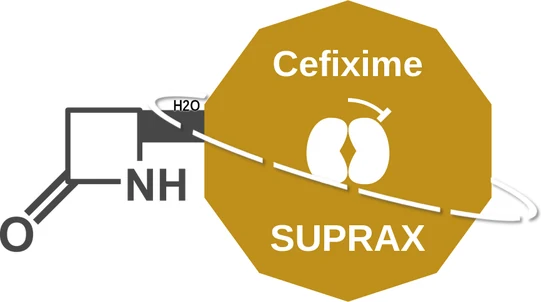
Cefixime
SUPRAX
What it isOral PBP-inhibiting third-generation cephalosporin; susceptible urinary and respiratory infections.
Why this oneIt offers convenient oral Gram-negative coverage but lacks the antipseudomonal reach of ceftazidime.
What limits itFor gonorrhea it is an alternative only when ceftriaxone is unavailable; poor staphylococcal coverage, diarrhea, and renal adjustment also matter.
FDA-approved for
- gonorrhea (1989)
- urinary tract infection (1989)
FDA label
Read the full label on DailyMed ↗
| FDA dosing | Population | Start | Target | Max |
|---|---|---|---|---|
| General infections | Adults | 400 mg/day (single or 200 mg q12h) | 400 mg/day | 400 mg/day |
| Uncomplicated cervical/urethral gonorrhea | Adults | 400 mg single dose | 400 mg single dose | 400 mg |
| S. pyogenes infection | Adults | 400 mg/day ≥10 days | 400 mg/day | 400 mg/day |
| General infections (use suspension) | Children ≥6 mo | 8 mg/kg/day QD or 4 mg/kg q12h | 8 mg/kg/day | 400 mg/day (>45 kg or >12 y: adult dose) |
Renal CrCl ≥60: normal dose. Adjust for CrCl <60 (CrCl 21–59 or hemodialysis ≈65% of dose; ≤20 or CAPD ≈50%). Dialysis does not remove significant drug
Hepatic Undefined
Instructions
- May take without regard to food
- Otitis media: use oral suspension (not tablet/capsule — suspension gives higher peak levels)
- S. pyogenes infection: treat ≥10 days
Cautions
- Hypersensitivity/anaphylaxis (shock, fatalities); cross-reactivity up to 10% in penicillin-allergic patients
- CDAD
- Fall in prothrombin activity; monitor PT in at-risk patients
- Dose adjustment/monitoring in renal impairment and dialysis
Adverse reactions
- Diarrhea (16%), nausea (7%), loose stools, abdominal pain, dyspepsia, flatulence
- Rash, urticaria, pruritus, drug fever, angioedema
- Transient hepatic/renal lab elevations; seizures; thrombocytopenia/leukopenia
Pregnancy No established drug-associated risks of major birth defects or miscarriage; no evidence of fetal harm in animals
Lactation No human data; present in animal milk and likely present in human milk
NO BOXED WARNINGS
Principal riskNo longer recommended for gonorrhea; poor staphylococcal cover
Cost, est. cash$10–$300/month
Generic entry2004
Classes and tags
Clinical profile
Legacy pregnancy categoryB
Defining liabilityAllergy, gastrointestinal effects and agent-specific renal, hepatic, hematologic or interaction risks.
Mechanism of action: Cefixime ballicule