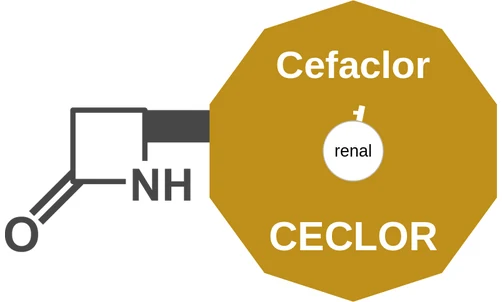
Cefaclor
CECLOR
What it isOral cephalosporin inhibiting bacterial penicillin-binding proteins; otitis and respiratory, urinary, or skin infections.
Why this oneIts unusually strong association with serum-sickness-like reactions, especially in children, distinguishes it from other cephalosporins.
What limits itFever, rash, and arthralgia should end treatment; renal impairment requires adjustment, and it lacks MRSA or pseudomonal coverage.
FDA label
Read the full label on DailyMed ↗
| FDA dosing | Population | Start | Target | Max |
|---|---|---|---|---|
| Susceptible bacterial infections (usual) | Adults | 250 mg q8h | Doses may be doubled (500 mg q8h) for severe infections (e.g. pneumonia) or less susceptible organisms | |
| Susceptible bacterial infections (usual) | Pediatric | 20 mg/kg/day divided q8h | 40 mg/kg/day for more serious infections, otitis media, or less susceptible organisms; max 1 g/day |
Renal Dosage usually unchanged in impaired renal function
Hepatic Undefined
Instructions
- Oral
- beta-hemolytic streptococcal infections: treat at least 10 days
Contraindications
- Known allergy to the cephalosporin group of antibiotics
Cautions
- Serum-sickness-like reactions (rash + arthritis/arthralgia ± fever), more frequent in pediatric patients and on second or subsequent courses
- Anaphylaxis may be more common with history of penicillin allergy
- Pseudomembranous colitis may occur during or after treatment
- Cephalosporins have triggered seizures, particularly in renal impairment without dose reduction — discontinue if seizures occur
Adverse reactions
- Hypersensitivity reactions ~1.5% (morbilliform eruptions 1/100; pruritus, urticaria, positive Coombs' each <1/200)
- Serum-sickness-like reactions (esp. pediatric, repeat courses)
- GI ~2.5%: diarrhea (1/70); nausea/vomiting rare
- Eosinophilia (1/50); genital pruritus, moniliasis or vaginitis (~1/50)
- Rare: SJS, TEN, anaphylaxis, transient hepatitis/cholestatic jaundice, thrombocytopenia, reversible interstitial nephritis, cytopenias
- Transient AST/ALT/alk phos elevations (1/40)
Pregnancy Category B — animal studies (up to 12x human dose) show no fetal harm; no adequate human studies; use only if clearly needed
Lactation Undefined
NO BOXED WARNINGS
Principal riskNo FDA boxed warning.
Cost, est. cash$10–$300/month
Generic entry1988
Classes and tags
Clinical profile
Legacy pregnancy categoryB
Defining liabilityAllergy, gastrointestinal effects and agent-specific renal, hepatic, hematologic or interaction risks.
Mechanism of action: Cefaclor ballicule