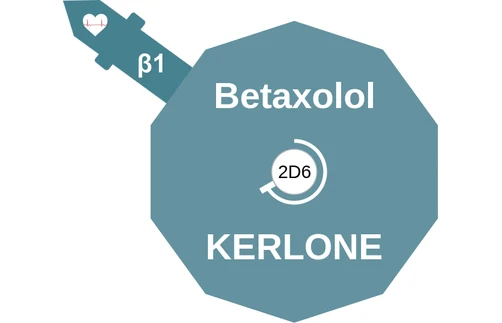
Betaxolol
KERLONE
What it isBeta-1-selective antagonist; hypertension and pressure lowering in open-angle glaucoma.
Why this oneIt is the most cardioselective ophthalmic beta blocker, making bronchospasm less likely than with timolol.
What limits itEye drops still cause systemic bradycardia or bronchospasm, while pressure reduction is weaker than with timolol.
FDA-approved for
- hypertension (1985)
- glaucoma (1985)
FDA label
Read the full label on DailyMed ↗
| FDA dosing | Population | Start | Target | Max |
|---|---|---|---|---|
| Hypertension | Adults | 10 mg QD | 10-20 mg QD | 40 mg QD (studied; no added benefit >20 mg) |
| Hypertension | Severe renal impairment / dialysis | 5 mg QD | increase by 5 mg/day q2wk | 20 mg/day |
| Hypertension | Elderly | 5 mg QD |
Titration Wait 7-14 days before doubling dose; in renal impairment increase every 2 weeks
Renal Severe renal impairment/dialysis: initial 5 mg QD, titrate by 5 mg/day q2wk to max 20 mg/day
Hepatic No adjustment needed
Instructions
- Do not stop abruptly; withdraw gradually over ~2 weeks and limit physical activity
Contraindications
- Sinus bradycardia
- Heart block greater than first degree
- Cardiogenic shock
- Overt cardiac failure
Cautions
- Abrupt withdrawal may exacerbate angina/precipitate MI — taper
- Bradycardia (dose-related), especially elderly
- May mask hypoglycemia; caution in diabetics
- Bronchospasm risk in airway disease
- ANA conversion/lupus-like reactions reported
Adverse reactions
- Bradycardia
- Fatigue, lethargy
- Dyspnea
- Dizziness, headache
- Impotence
Pregnancy Category C — use only if potential benefit justifies risk; beta-blockers may reduce placental perfusion
Lactation Undefined
NO BOXED WARNINGS
Principal riskSystemic beta blockade; weaker than timolol
Cost, est. cash$10–$400/month
Generic entry1999
Classes and tags
Clinical profile
Legacy pregnancy categoryUnknown / historical label unavailable
Defining liabilityGenerally tolerated at therapeutic doses; clinically important risks are agent-specific and increase with interactions or organ impairment.
Mechanism of action: Betaxolol ballicule