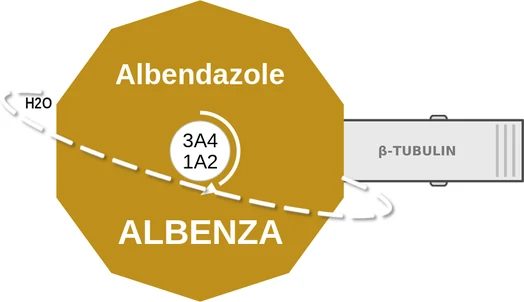
Albendazole
ALBENZA
What it isBeta-tubulin-inhibiting benzimidazole anthelmintic; neurocysticercosis, hydatid disease, and other helminths.
Why this oneBetter tissue penetration than mebendazole makes it the choice for tissue-dwelling parasites.
What limits itA fatty meal raises systemic exposure when tissue treatment is intended; prolonged courses can suppress marrow and injure liver.
FDA-approved for
- neurocysticercosis and hydatid disease (1996)
FDA label
Read the full label on DailyMed ↗
| FDA dosing | Population | Start | Target | Max |
|---|---|---|---|---|
| Hydatid disease | ≥60 kg | 400 mg BID with meals | 800 mg/day | |
| Hydatid disease | <60 kg | 15 mg/kg/day divided BID with meals | 800 mg/day | |
| Neurocysticercosis | ≥60 kg | 400 mg BID with meals | 800 mg/day | |
| Neurocysticercosis | <60 kg | 15 mg/kg/day divided BID with meals | 800 mg/day |
Renal Undefined
Hepatic Undefined
Instructions
- Take with food
- May be crushed or chewed and swallowed with water
- Hydatid disease: 28-day cycle then 14-day drug-free interval, total 3 cycles
- Neurocysticercosis (8-30 days): give with steroid and anticonvulsant therapy; consider corticosteroids in first week
- Monitor CBC and liver enzymes at start of each 28-day cycle and every 2 weeks
- Pregnancy test before therapy; contraception during and 3 days after last dose
Contraindications
- Hypersensitivity to benzimidazole-class compounds
Cautions
- Bone marrow suppression (fatal cases) — monitor blood counts; higher risk with liver disease/hepatic echinococcosis
- Embryo-fetal toxicity — pregnancy testing and contraception
- Neurocysticercosis: cerebral hypertensive episodes/seizures — give steroid + anticonvulsant
- Retinal damage risk in retinal cysticercosis — examine for retinal lesions first
- Hepatic effects — monitor liver enzymes; discontinue if significantly elevated
Adverse reactions
- Hydatid disease: elevated LFTs, abdominal pain, nausea/vomiting, reversible alopecia, headache, dizziness/vertigo, fever
- Neurocysticercosis: headache, nausea/vomiting, raised intracranial pressure, meningeal signs
Pregnancy May cause fetal harm (animal teratogenicity); available human data have not identified drug-associated risks. Test for pregnancy and use contraception.
Lactation Albendazole and its sulfoxide metabolite are low in human breast milk; no reported adverse effects on the breastfed infant.
NO BOXED WARNINGS
Principal riskMyelosuppression on prolonged courses
Cost, est. cash$10–$300/month
Generic entry2018
Classes and tags
Clinical profile
Legacy pregnancy categoryUnknown / historical label unavailable
Defining liabilityGenerally tolerated at therapeutic doses; clinically important risks are agent-specific and increase with interactions or organ impairment.
Mechanism of action: Albendazole ballicule