Acarbose
PRECOSE
What it isIntestinal alpha-glucosidase inhibitor delaying carbohydrate absorption; postprandial hyperglycemia in type 2 diabetes.
Why this oneIt acts in the gut lumen and does not cause hypoglycemia by itself.
What limits it⚑ If another drug causes hypoglycemia, treat with glucose—not sucrose, whose digestion is blocked. Flatulence commonly ends the trial.
FDA-approved for
- type 2 diabetes (1995)
FDA label
Read the full label on DailyMed ↗
| FDA dosing | Population | Start | Target | Max |
|---|---|---|---|---|
| Type 2 diabetes mellitus (adjunct to diet; ± sulfonylurea, insulin, or metformin) | adult | 25 mg TID | 50–100 mg TID | ≤60 kg: 50 mg TID; >60 kg: 100 mg TID |
Titration Adjust at 4–8 week intervals based on 1-hour postprandial glucose or HbA1c and tolerance.
Renal Undefined
Hepatic Contraindicated in cirrhosis.
Maximum dose is weight-based: ≤60 kg → 50 mg TID; >60 kg → 100 mg TID.
Instructions
- Take three times daily at the start (with the first bite) of each main meal.
- Start at a low dose (25 mg) and titrate gradually to minimize GI side effects.
- Adhere to the prescribed diabetic diet to limit intestinal side effects.
- Only patients >60 kg should be titrated above 50 mg TID.
Contraindications
- Diabetic ketoacidosis
- Cirrhosis
- Inflammatory bowel disease, colonic ulceration, or partial/predisposition to intestinal obstruction
- Chronic intestinal disease with marked disorders of digestion or absorption
- Conditions that may deteriorate from increased intestinal gas formation
Cautions
- Dose-related elevated serum transaminases (greater risk in patients ≤60 kg) — monitor
- Common GI symptoms: flatulence, diarrhea, abdominal pain
- Rare pneumatosis cystoides intestinalis
- Hypoglycemia risk when combined with a sulfonylurea or insulin
Adverse reactions
- GI (most common): flatulence (74%), diarrhea (31%), abdominal pain (19%)
- Elevated serum transaminases; postmarketing: fulminant hepatitis, skin reactions, edema, ileus/subileus, jaundice/hepatitis, thrombocytopenia
Pregnancy Pregnancy Category B; no adequate human studies; use only if clearly needed (insulin generally preferred in pregnancy).
Lactation Should not be given to nursing women (present in rat milk; human excretion unknown).
NO BOXED WARNINGS
Principal riskOnly GLUCOSE corrects hypoglycemia on a co-prescribed agent
Cost, est. cash$5–$150/month
Generic entry2008
Classes and tags
Clinical profile
Legacy pregnancy categoryMultiple / indication-, trimester- or formulation-dependent
Defining liabilityLocal irritation, sensitization or administration-site injury; negligible systemic toxicity at usual use.
Mechanism of action: Acarbose ballicule
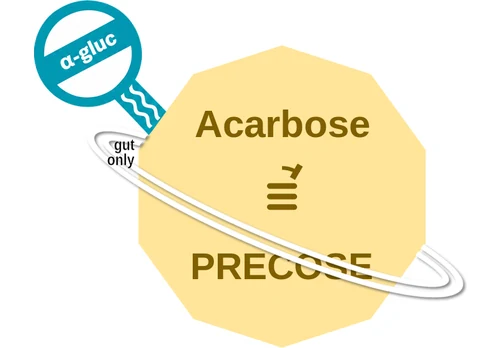
Open Acarbose in the interactive console ↗
Memory aids: mascots and interaction avatars