Flumazenil and Diazepam: a GABA-A receptor, benzodiazepine site interaction
Flumazenil blocks the site Diazepam binds to, so Diazepam loses its hold on the GABA-A receptor.
Diazepam does not open the channel itself — it binds a modulatory site and makes the receptor respond more strongly to its own transmitter. Flumazenil occupies that same site without modulating anything, so while it is there Diazepam cannot.
Given together they work against whatever each was started for. If both are genuinely needed, expect less of Diazepam’s effect than its dose would suggest.
This is a pharmacodynamic interaction. Neither drug changes the other’s concentration, so a level, an AUC estimate or a genotype looks entirely normal while the clinical effect is blunted.
The direction can be the useful one. The same opposition is what makes a reversal agent, an antidote or a planned antagonist work.
Flumazenil’s own half-life is about an hour — shorter than the drug it is reversing — so sedation can recur as it wears off. A single response is not the end of the episode; the patient is watched, and a repeat dose or an infusion may be needed.
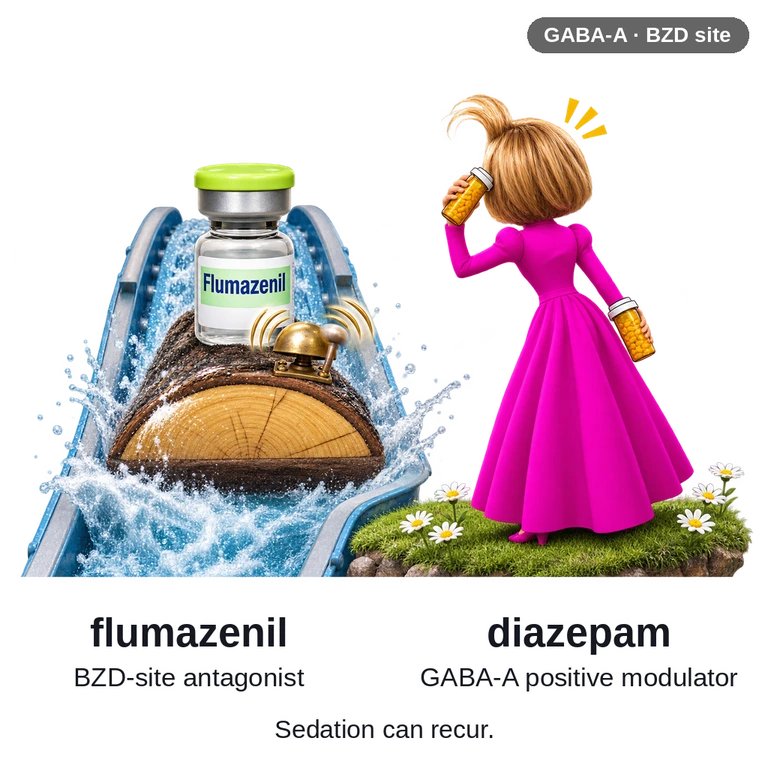
The two ballicules, with the GABA-A receptor, benzodiazepine site lit on each
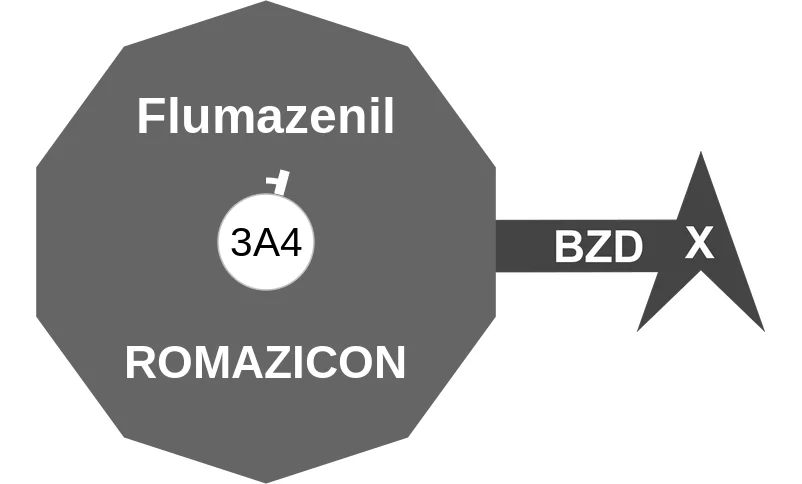
GABA-A receptor, benzodiazepine site antagonist
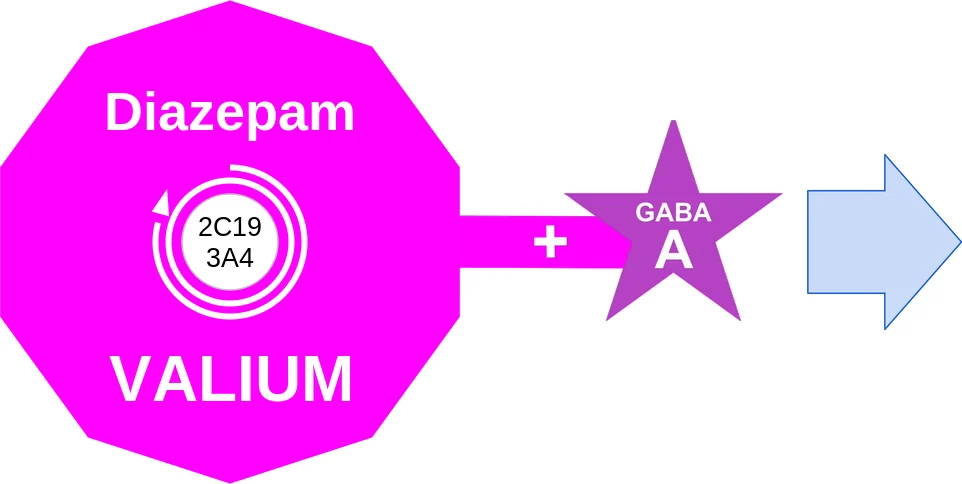
GABA-A receptor, benzodiazepine site positive allosteric modulator
The ring marks the peg each drug wears for this receptor — the same cross-illumination Interact! draws when the two are put side by side.
The mascots

Flume a -zepine

Diaz in the Valley...um