Vicodin / Norco
Combination product
Pronunciation: hye-droe-KOE-doen and a-set-a-MEE-noe-fen
Combination of Hydrocodone and Acetaminophen.
Each component keeps its own pharmacology page; the combination itself adds no new mechanism.

“Viking Hydrant code”
Components (2)
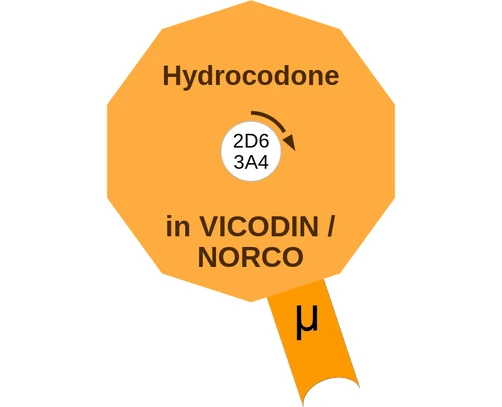
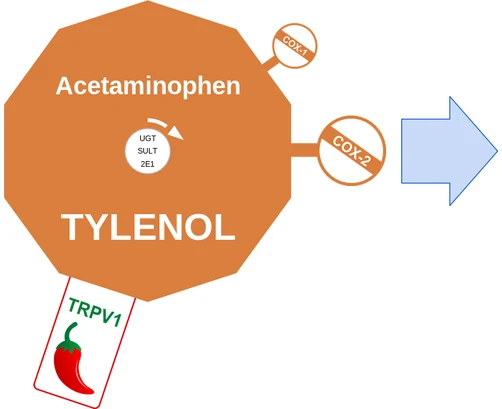
FDA label
Read the full label on DailyMed ↗
| FDA dosing | Population | Start | Target | Max |
|---|---|---|---|---|
| Pain severe enough to require an opioid, alternatives inadequate (5/325 mg) | Adults | 1–2 tabs q4–6h PRN | Lowest dose achieving adequate analgesia | 8 tabs/day |
| Same (7.5/325 mg or 10/325 mg) | Adults | 1 tab q4–6h PRN | Lowest dose achieving adequate analgesia | 6 tabs/day |
Renal Severe renal disease: follow therapy with serial renal function tests (label gives no dose adjustment)
Hepatic Severe hepatic disease: follow therapy with serial liver function tests (label gives no dose adjustment); APAP hepatotoxicity risk >4,000 mg/day
Total daily acetaminophen from ALL sources — hepatotoxicity mostly at >4,000 mg/day APAP
Instructions
- Use lowest effective dose for shortest duration; many acute pain conditions need no more than a few days
- Converting from other opioids: underestimate the 24-h dose (conservative conversion)
- Do not abruptly stop in physically dependent patients: taper ≤10–25% of total daily dose every 2–4 weeks; pause or slow taper if withdrawal emerges
- Discuss access to an opioid overdose reversal agent (naloxone/nalmefene) with all patients
- Store securely out of reach of children; dispose of unused tablets promptly (flush if no take-back available)
Available strengths
- tab 5/325, 7.5/325, 10/325 mg
Contraindications
- Significant respiratory depression
- Acute or severe bronchial asthma in unmonitored setting or without resuscitative equipment
- Known or suspected GI obstruction, including paralytic ileus
Cautions
- Life-threatening respiratory depression — greatest risk at initiation/dose increase; elderly, cachectic, debilitated, and chronic pulmonary disease patients at higher risk
- Concomitant benzodiazepines/CNS depressants/alcohol: reserve for inadequate alternatives
- Adrenal insufficiency (usually >1 month of use)
- Severe hypotension incl. orthostatic; caution with circulatory shock
- Serotonin syndrome with concomitant serotonergic drugs
- Opioid-induced hyperalgesia/allodynia
- May impair driving/machinery operation
Adverse reactions
- Most frequent: light-headedness, dizziness, sedation, nausea, vomiting
- Constipation; drowsiness, mental clouding, dysphoria, mood changes
- Urinary retention/ureteral spasm
- Hearing impairment or permanent loss (chronic overdose)
- SJS/TEN, rash, pruritus; thrombocytopenia, agranulocytosis
- Hypoglycemia; androgen deficiency (long-term); anaphylaxis
Pregnancy Prolonged use during pregnancy → neonatal opioid withdrawal syndrome (life-threatening if not recognized/treated; ensure neonatology management at delivery); can cause fetal harm
Lactation Advise nursing mothers to watch infant for increased sleepiness, breathing difficulty, or limpness and seek immediate care
Cost
| Strength | #/mo | generic $/unit | CostPlus | |
|---|---|---|---|---|
| 5/325 mg | tab | per unit | $0.14/ea | not offered |
| 7.5/325 mg | tab | per unit | $0.14/ea | not offered |
| 10/325 mg | tab | per unit | $0.15/ea | not offered |
Clinical profile
Defining liabilityRespiratory depression, dependence and acetaminophen liver injury
Part D rank #26.
Self-check
- Which component accounts for Vicodin / Norco’s boxed hepatotoxicity?
Acetaminophen. - Which respiratory harm is boxed for Vicodin / Norco?
Life-threatening respiratory depression.
All drugs · Open Vicodin / Norco in the interactive console ↗